
By Ryan Provencher, Founder of Firefighter Peak Performance and Executive Fitness Advisor for CRACKYL Magazine
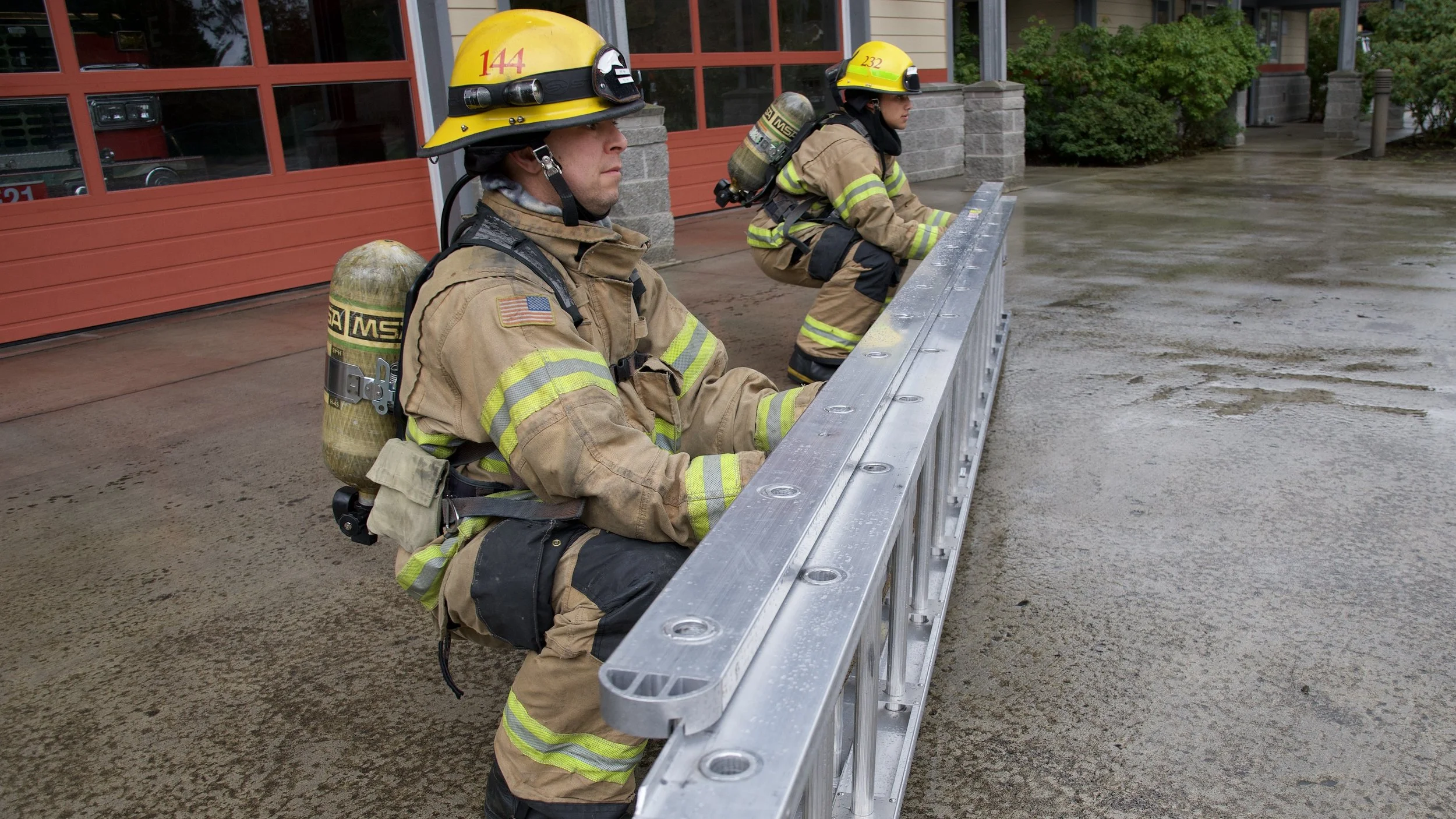
Firefighters work hard—but effort alone doesn’t guarantee readiness. Discover the Seven Foundations of Training With Purpose that build durability, reduce injury risk, and elevate workouts into intentional preparation.
Hard Work Isn’t the Same as Preparation
Over three decades in the fire service, I trained consistently. I lifted. I ran. I showed up.
There were seasons when I embraced a “go big or go home” mindset—heavy lifts, brutal conditioning sessions, and the satisfaction of walking out of the gym completely spent.
There were other seasons when shift work, injuries, and life challenges compounded. Fatigue accumulated. Chronic pain surfaced. Consistency became harder to maintain.
Looking back, one realization changed everything.
Effort and readiness are not the same thing.
Training hard isn’t the same as training smart. Being fit isn’t the same as being ready.
That distinction reframed how I approached physical training—first as a firefighter, and later as a coach responsible for preparing others for the job.
Over time, I recognized the same pattern across the profession. Some firefighters train hard but without structure. Others struggle with consistency under operational fatigue. Some chase intensity without progression or recovery. Others step away altogether.
This is not a character flaw. It is the reality of the job.
Firefighters are rarely short on effort. What is often missing is intention and structure.
Firefighter fitness isn’t about working harder.
It’s about training with purpose.
Preparation drives performance.
The Gap Between Working Out and Training
In Fire Department Incident Safety Officer, Dave Dodson distinguishes between arbitrary aggressiveness and intellectual aggressiveness.
Arbitrary action is impulsive and reactive — driven by emotion or taken on a whim. Intellectual aggressiveness is deliberate, informed, and aligned with the situation at hand.
On the fireground, we do not confuse motion with progress. We operate from an Incident Action Plan. We size up conditions, establish a strategy, assign tactics and tasks, and adjust as conditions evolve.
When it comes to fitness, that same structure is often missing.
Many firefighters rely on workouts without a clear plan. A random session pulled from an app. A lift based on mood. A circuit that looks demanding.
Sweat feels like progress. Fatigue feels like effort.
But random workouts do not create predictable performance.
For the average person, that may be enough.
For firefighters, it is not.
So the question becomes:
Are you training—or just working out?
A workout alone does not build the job-specific strength, endurance, movement quality, and resilience required on the fireground. It rarely accounts for progression, recovery, or the realities of shift work. Over time, that lack of structure leads to stalled progress, chronic wear, increased injury risk, and inconsistent performance.
Training, by contrast, is deliberate. It is structured, progressive, and adaptable. It prepares you for the physical demands of the job rather than simply exhausting you in the moment. It enhances performance. It does not compete with it.
Firefighting is a high-skill profession performed in high-risk environments. It demands a professional standard of preparation.
In professional sport, preparation is never accidental. Workloads progress deliberately. Recovery is scheduled. Performance is measured. Adjustments are made before breakdown occurs.
The objective isn’t to dominate today’s workout. It’s to be ready when the job demands your best.
Firefighters operate in environments defined by consequence — without predictable schedules, without second chances, and often with lives on the line.
The question is not whether firefighters are athletes. It’s whether we prepare like professionals for whom the stakes couldn’t be higher.
Training with purpose begins with intention — preparation built around the demands of the job, not the latest trend in the gym.
The 7 Foundations of Training With Purpose
High performance is not accidental. It is built on structure. Training with purpose is anchored in seven foundational principles.
1. Move Well
Before intensity, there must be integrity.
Firefighting demands fundamental movement patterns—squatting, hinging, lunging, pushing, pulling, rotating, and locomotion under load and fatigue.
If those patterns break down, they will not improve under heavy load or higher intensity.
Movement quality determines how force transfers through joints, how fatigue is tolerated, and how resilient your body remains over years of service.
Intentional training begins with honest self-assessment and consistent technical standards.
Load follows movement quality—not the other way around.
2. Train for the Job
Align preparation with operational demands.
The SAID principle—Specific Adaptation to Imposed Demands—reminds us that the body adapts to the demands consistently placed upon it. If your training does not reflect the job, your adaptation will not either.
Firefighter preparation centers on movement patterns that mirror the tasks we perform. Rather than isolating muscles, it develops coordinated strength under load.
Simple tools such as sandbags, kettlebells, and medicine balls create dynamic resistance that transfers directly to the fireground.
Interval training mirrors the intensity and duration of work performed on air before the low-air alarm activates.
Train. Recover. Repeat.
3. Build Capacity Over Time
Progressive training replaces random workouts.
Progressive overload means increasing load, volume, complexity, or intensity deliberately over time.
Without progression, performance plateaus. With excessive high intensity and no structure, burnout and breakdown follow.
Random workouts produce random outcomes. Structured progression builds durable capacity.
Capacity is not built in a single session. It is developed through measurable progress over time.
4. Develop Your Engine
Build endurance and power for the fireground.
Firefighting demands sustained effort and repeated bursts of high-intensity output under stress.
Physiologically, that requires contribution from your primary energy systems: the aerobic system, which supports extended work and recovery, and the anaerobic systems, which fuel shorter, high-output efforts.
Consider a structure fire. You gear up, advance a charged line, force entry, locate and extinguish the fire, then recover just enough to take on the next task.
Your aerobic system is the foundation. Your anaerobic systems produce force and power.
Intentional preparation develops these energy systems through a structured, progressive approach.
5. Prioritize Recovery
Manage total stress and training load.
Shift work compounds physical stress. Sleep disruption, traumatic incidents, heat exposure, call volume, and life demands all influence recovery capacity.
Recognizing and managing total stress is essential.
Allostatic load reflects cumulative stress from all sources.
Total training load reflects stress from physical training and occupational demands specifically.
Training and recovery must be managed to support performance and longevity. Without stress management, even the best training plan eventually breaks down.
Light-intensity sessions restore movement quality.
Low-intensity sessions build the aerobic base.
Moderate-intensity sessions develop strength.
High-intensity sessions build work capacity.
Each serves a purpose in the context of a specific progressive plan.
Recovery is not optional.
It is part of proactive preparation.
To explore this further, read: “Balancing Stress and Performance: The role of Allostatic and Total Training Load”
6. Measure What Matters
If it is measurable, it is manageable.
High-performance environments track what matters—not to chase numbers, but to inform decisions.
Objective metrics such as reps, load, and time capture output.
Subjective metrics such as movement quality, perceived intensity, and discomfort capture internal response.
Both are essential to intentional preparation.
Measurement turns training into feedback that drives progression.
Scoring the workout is part of the workout.
7. Adjust Based on Readiness
Autoregulation sustains progress.
Understanding stress and measuring output are only the first steps. The next is adjusting training to support performance.
Autoregulation is the practice of modifying training based on readiness.
Apply autoregulation within individual workouts. Adjust load, volume, tempo, and recovery to preserve movement quality. Never sacrifice technique just to power through a session.
Apply autoregulation across training cycles. Keep the overall structure intact, but adjust daily intensity based on recovery, operational stress, and overall readiness. Some days you push. Some days you pull back — so you stay response-ready.
Structure provides direction. Autoregulation provides adaptability.
The Seven Foundations of Training With Purpose shift firefighter fitness from random effort to intentional preparation aligned with the demands of the job.
The Firefighter Fitness Plan Framework builds on that foundation, providing a step-by-step approach to designing programs that are structured, progressive, and adaptable to the realities of the fire service.
To learn more about bringing structure to your firefighter physical training, read: “Your Fitness Action Plan: Strategy and Tactics for Firefighter Peak Performance”
Finding Your Purpose
When training shifts from activity to intention, something changes.
You stop chasing exhaustion as proof of effort. You stop measuring success by how drained you feel at the end of a session.
Instead, you ask a better question: Is this preparing me for the job?
That question changes everything.
Fatigue becomes something you manage, not something that manages you. Strength, endurance, and work capacity begin to reflect the real demands of the fireground.
But the most important shift is not physical.
It is mindset.
Readiness stops being a vague aspiration and becomes part of your professional responsibility.
You train with purpose. You recover with intention. You think in terms of durability and longevity—not just intensity.
This is the Athlete Approach to Firefighter Readiness.
Not ego. Not random intensity. Structure. Progression. Recovery. Adaptability.
Professional athletes prepare long before performance is required. They do not wait for game day to find out if they are ready.
Firefighters should not either.
The job will test you. Sleep will be disrupted. Stress will accumulate.
Preparation does not eliminate those realities.
It reduces uncertainty.
When preparation is structured and repeatable, capacity builds. When capacity builds, confidence follows.
Find your purpose in the way you prepare.