
Perform With Confidence: When Preparation Meets the Moment
By Ryan Provencher, Founder of Firefighter Peak Performance and Executive Fitness Advisor for CRACKYL Magazine
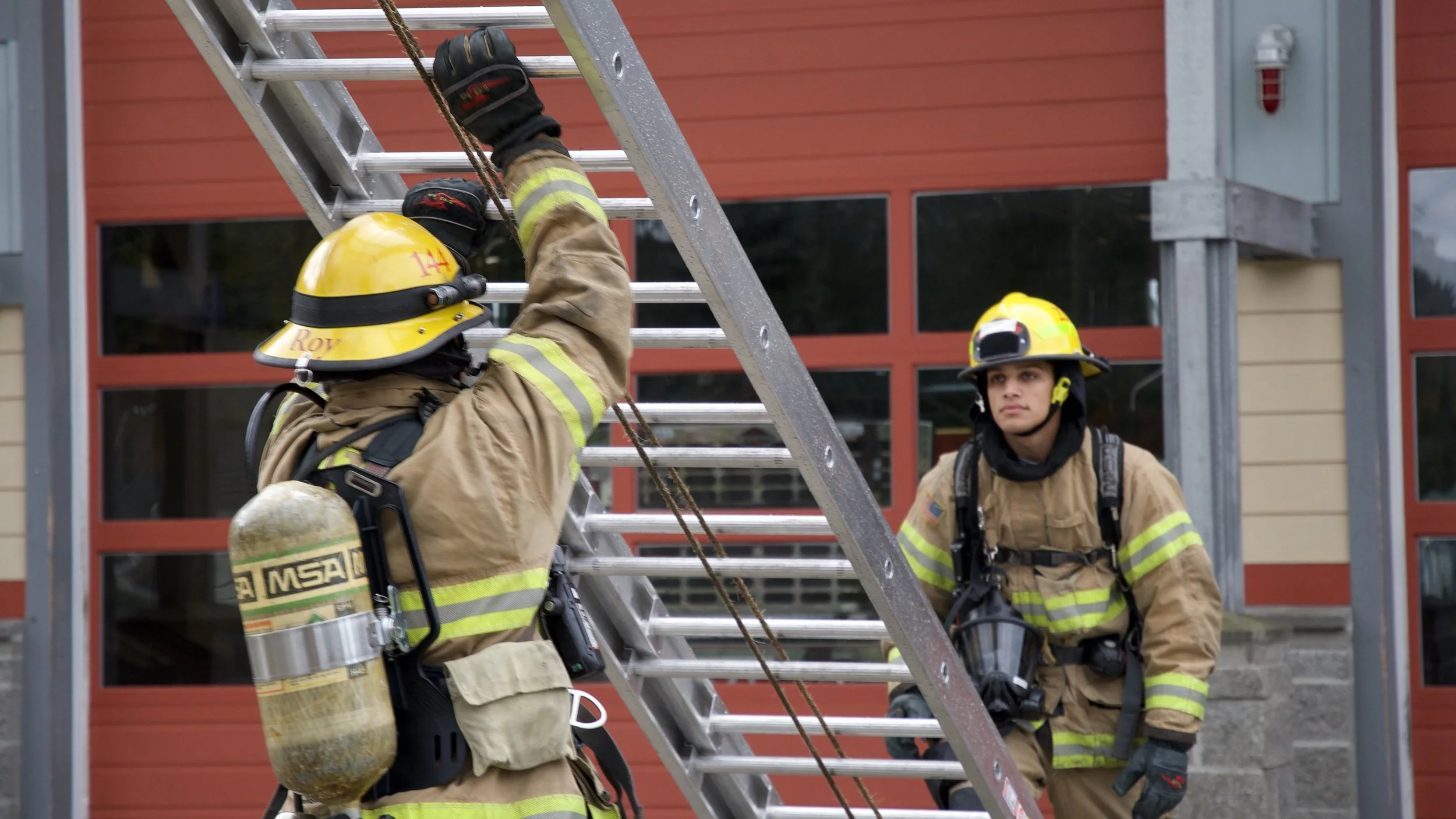
Confidence on the fireground isn’t something you decide to have—it’s built through consistent, intentional preparation. A structured approach to training develops the capacity to perform with confidence when it matters most.
Confidence Doesn’t Just Show Up
Confidence in the fire service is often misunderstood. It’s commonly framed as a mindset—something you can choose when the situation demands it.
But confidence doesn’t work that way.
It doesn’t just show up in the moment. It’s built through consistent, intentional preparation long before it’s needed.
In Part 1 of this series, we defined training with purpose as intentional preparation for the demands of the job.
That preparation is not the end goal—it is the process that carries into high-stakes situations where your best is required.
Over more than a decade working with firefighter recruits in the academy, I’ve watched that process unfold again and again.
Recruits arrive eager but uncertain. Some have strong athletic backgrounds. Others are stepping into the most physically demanding environment they’ve ever experienced. Regardless of where they start, they all share one thing in common:
They have not yet adapted to the specific demands of the job.
Early in the academy, much of the work happens in the gym and on the drill ground. The training is deliberate. Repetitions accumulate as recruits build strength, refine movement, and learn to operate more efficiently in gear.
Then something begins to change.
The same recruits who once approached drills cautiously start to move with more control. Their breathing steadies under effort. Tasks that once felt overwhelming—advancing hose lines, forcing entry, deploying ground ladders—begin to feel more manageable.
Not because the work is easier, but because they are becoming more capable.
And with that shift, something else becomes visible.
Confidence.
Not the loud, performative kind, but the quiet kind that shows up in how someone carries themselves and how they approach demanding work.
That confidence isn’t accidental.
It’s earned through preparation.
Preparation CREATES Adaptation
In exercise science, this process is known as adaptation—the body’s response to the demands consistently placed upon it. When training reflects the realities of the job, the body adapts to meet those demands more effectively.
Strength improves. Endurance builds. Movement becomes more efficient under load.
Over time, these adaptations create the competence and work capacity every firefighter depends on.
Capacity is what allows a firefighter to sustain effort under fatigue, move with control while handling equipment, and perform repeated tasks without breaking down. It is the foundation that supports performance in real-world conditions.
When firefighters trust that capacity, confidence follows.
This is where the distinction between hope and confidence becomes clear.
In high-risk professions, there is a familiar saying:
Hope is not a strategy.
It’s a reminder that when the stakes are high, outcomes cannot depend on wishful thinking.
Hope is based on belief—believing you can handle the work.
Confidence is based on preparation—knowing you can handle the work because you’ve already done it in the gym and on the drill ground.
One is uncertain. The other leaves nothing to chance.
Adaptation DRIVES Performance
Adaptation is not random. It is the result of preparation applied with structure and intent.
In Part 1, we introduced the Seven Foundations of Training With Purpose. These principles ensure that preparation leads to meaningful adaptation—and that adaptation carries into performance.
Movement quality ensures that firefighters can move efficiently and safely under load. When movement is sound, force is transferred more effectively, energy is conserved, and the risk of injury is reduced.
Job-specific training aligns preparation with the actual demands of the fireground. When training reflects the work—pushing, pulling, lifting, rotating—the body adapts in ways that transfer directly to performance.
Progressive overload builds strength and endurance over time. By gradually increasing demands, firefighters develop the capacity to handle more work without breaking down.
Energy system development prepares firefighters for both sustained effort and high-output tasks. A well-developed aerobic base supports recovery and endurance, while anaerobic capacity allows for repeated bursts of effort under stress.
Active recovery supports the adaptation process by promoting intentional regeneration. Without adequate recovery, the body cannot fully rebuild, adapt, or improve. The result is diminished performance and a greater risk of injury.
Measurement provides both objective and subjective feedback. Tracking performance, workload, and adaptation allows firefighters to see progress and make informed adjustments in real time.
Autoregulation ensures that training matches readiness. By adjusting intensity, volume, or load based on how the body is responding, firefighters maintain consistency and avoid unnecessary setbacks.
Each of these foundations contributes to building the capacity firefighters need to do the job.
And capacity is what confidence is built on.
When the Moment Arrives
Firefighters do not choose when the moment arrives.
The alarm sounds. The situation unfolds in real time, often under stress, uncertainty, and fatigue. There is no opportunity to think about how you prepared.
The moment is here. The work is in front of you.
In those moments, what matters is not what you intend to do.
It is what you are prepared to do.
Firefighters who have trained with purpose bring something different into those situations.
There is no uncertainty in how to approach the work. No hesitation in the decisions that need to be made. The pace is controlled, even when the environment is not.
The work is still demanding. The conditions are still challenging. But it no longer feels unfamiliar.
It feels like something they are prepared for.
They are not rushing or reacting. They are simply doing the work in front of them.
This is what confidence looks like in the fire service.
It is not something you decide to have in the moment. It is not something you assume will be there when you need it.
It is the result of preparation that has been built and tested over time.
Preparation builds capacity. Capacity builds confidence.
And confidence is what allows firefighters to meet the moment with competence and composure.
This is what it means to Train With Purpose.
This is what it means to Perform With Confidence.
And it is what prepares you to Be Response Ready.