
By Ryan Provencher, Firefighter Peak Performance Founder and Executive Fitness Advisor for CRACKYL Magazine
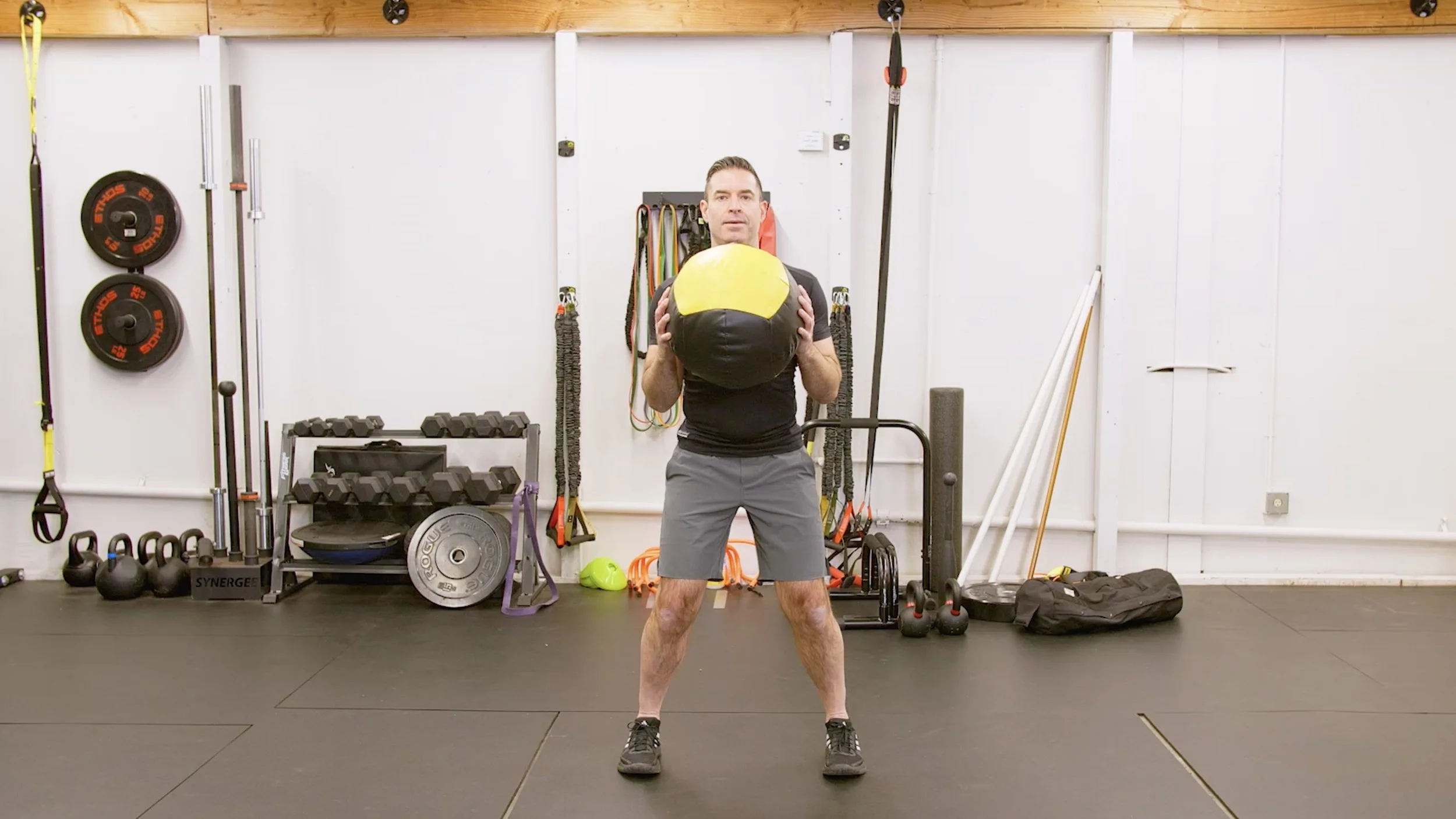
The “Med Ball Press + Pullover Slam” exercise utilizes the Vertical Push and Vertical Pull Movement Patterns to develop explosive power for overhead tasks like ceiling breach during overhaul.
While the medicine ball allows for a true slam and rapid force expression, similar training effects can be achieved using kettlebells or steel clubs by replicating the press-to-pullover sequence with a controlled swing. This maintains intent, reinforces overhead mechanics, and provides adaptable loading options when space, equipment, or noise limitations exist.
Starting Position
Stand tall with feet about shoulder-width apart, weight evenly distributed through the mid-foot. Hold the medicine ball at chest height with both hands, elbows slightly tucked. Maintain a neutral spine from head to tailbone, ribs stacked over the pelvis, and core engaged to create a stable base.
Press Phase
Press the medicine ball overhead in a smooth, controlled motion, fully extending the arms without arching the lower back. The movement should come from coordinated extension through the ankles, knees, hips, and shoulders—not from excessive lumbar extension.
Pullover Slam Phase
From the overhead position, actively pull the ball back behind the head with straight or slightly bent arms, then forcefully drive it forward and down toward the ground. Initiate the slam by bracing the core and hinging slightly at the hips, transferring force from the lower body through the trunk and into the arms. Catch or retrieve the ball safely and reset for the next repetition.
6-Point Self-Check
Use this quick scan to maintain proper technique as fatigue builds:
Head: Neutral position with eyes forward; avoid excessive neck extension during the press or slam.
Torso: Core braced, ribs down, spine neutral—avoid flaring the ribs or arching the back overhead.
Hips: Hips stay stacked under the torso during the press; hinge slightly during the slam to absorb and produce force safely.
Legs: Knees remain soft and athletic, helping transfer force and absorb load during the slam.
Shoulders: Shoulders stay packed and controlled; avoid shrugging or losing stability overhead.
Arms: Arms move smoothly overhead and through the pullover, maintaining alignment from shoulder to elbow to wrist.
Other Resources:
Link to Dynamic Warm-Up Exercise: Figure 8 Arm Circles
Link to Flexibility Cool-Down Exercise: Floor Scorpion