
By Ryan Provencher, Founder of Firefighter Peak Performance and Executive Fitness Advisor for CRACKYL Magazine
A practical framework for building a fire station gym tailored to your department, with equipment options, layout guidance, and strategies to make the most of your space and budget.
Why Invest in a Fire Station Gym?
Walk into fire stations across the country, and you'll find everything from a treadmill and a few mismatched dumbbells to fitness facilities that rival commercial gyms.
But more equipment doesn't necessarily make a better fire station gym.
Firefighting requires strength, endurance, power, work capacity, movement quality, and resilience. A well-designed station gym gives firefighters convenient access to the equipment and space needed to develop and maintain those qualities.
The question isn't simply what equipment a fire station gym should have.
It's how to give your firefighters the greatest training capability with the space and budget you have available.
To answer that, let's build one.
Start With Your Space, Crew, and Budget
A good fire station gym starts with understanding your department's needs and resources.
How many firefighters need to train at the same time? What types of training do they need to perform? How much space is available? What equipment do you already have? And what can your department realistically invest?
For this article, we'll use a relatively small station gym as an example:
Simultaneous users: Up to 4 firefighters
Dedicated fitness space: Approximately 500 square feet
Training capabilities: Tactical fitness, strength training, cardio and conditioning, and movement/active recovery
That doesn't mean four of every piece of equipment. Firefighters can rotate through different equipment and training areas, allowing a relatively small gym to support multiple users without unnecessary duplication.
You also don't need 500 square feet or every piece of equipment listed below to get started. These same principles can be applied to a small training area with a few versatile tools or scaled up to a complete fitness facility.
Build the training capability your firefighters need within the space and resources you have available.
Tactical Fitness
Tactical fitness equipment offers tremendous training versatility without requiring the footprint, cost, or maintenance of multiple large exercise machines.
Kettlebells, sandbags, medicine balls, steel clubs, and suspension trainers develop strength, power, muscular endurance, work capacity, stability, and movement quality. These simple tools can be used to load fundamental movement patterns including squatting, hinging, lunging, pushing, pulling, rotation, and locomotion.
Most can be stored in a closet, corner, or wall rack when not in use, making them especially valuable when space and budget are limited.
Some exercises may resemble tasks performed on the fireground, but that isn't the primary objective.
The goal is to develop physical capacity that transfers to the demands of firefighting.
Tactical Fitness Equipment
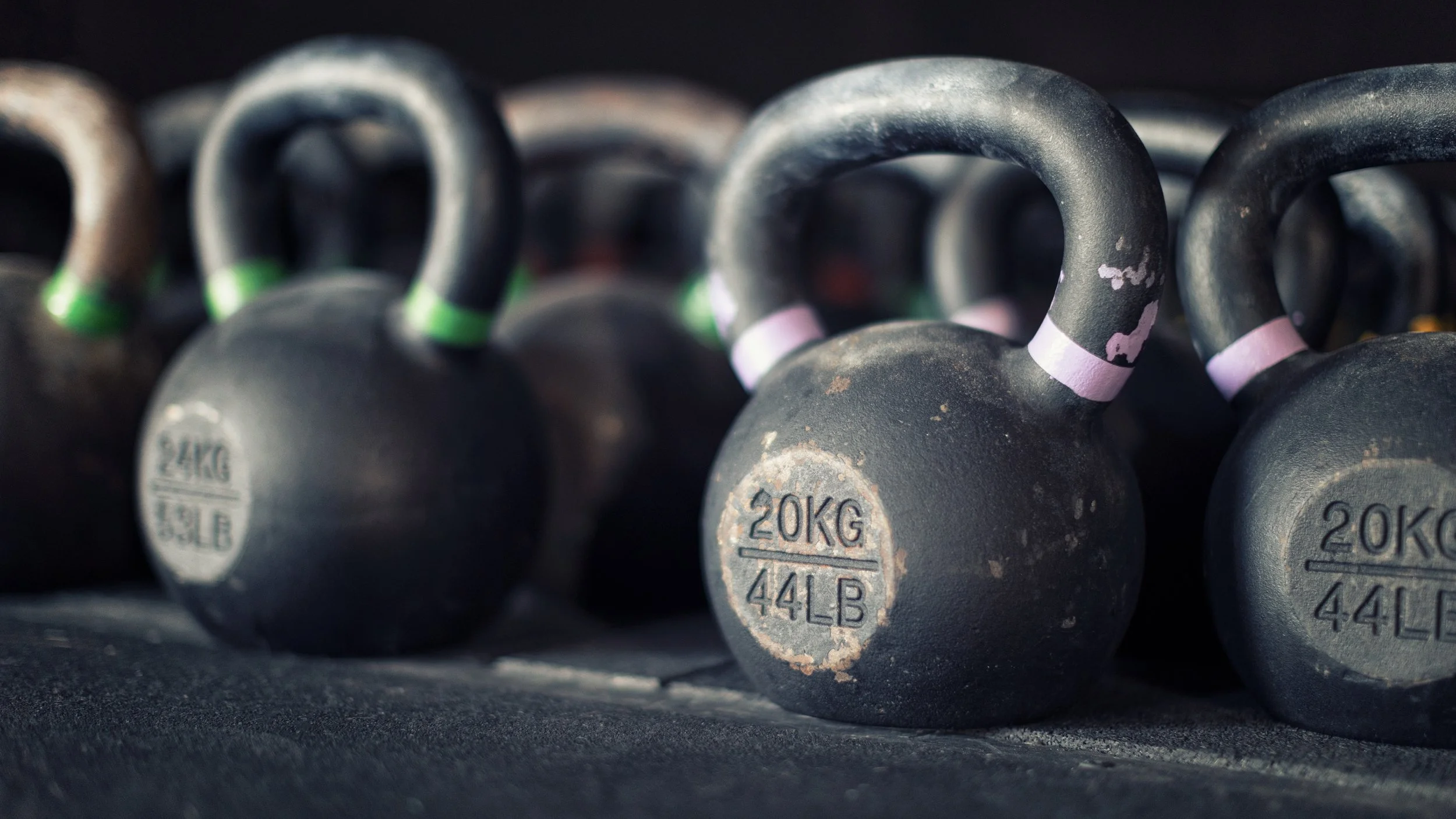
Kettlebells
Kettlebells bridge the gap between traditional strength training and more dynamic, total-body training. Their design allows firefighters to develop strength and power while also incorporating carries, ballistic exercises, and higher-repetition conditioning.
Sample Setup: 4 × 10 kg, 4 × 16 kg, 2 × 24 kg, and 2 × 32 kg
Sandbags
Sandbags develop strength and stability while controlling an awkward, shifting load through a wide variety of movements. Their versatility creates training options that are difficult to replicate with more traditional equipment.
Sample Setup: 2 × 25 lb. and 2 × 50 lb. with adjustable filler bags
Medicine Balls
Medicine balls develop explosive power by allowing firefighters to accelerate and release the load through throws and slams. This supports the ability to produce force quickly during demanding fireground tasks.
Sample Setup: 1 each at 10, 16, 20, and 24 lb.
Steel Clubs
Steel clubs use an offset load to develop grip strength, shoulder stability, trunk control, and rotational strength. Their unique design challenges firefighters to control force through a wide range of movements.
Sample Setup: 4 × 10 lb., 4 × 15 lb., 2 × 25 lb., and 2 × 35 lb.
Suspension Trainers
Suspension trainers use body position to adjust resistance, making them useful for firefighters with different strength and ability levels. They develop bodyweight strength, stability, and movement control through a wide variety of exercises.
Sample Setup: 2-4 suspension trainers with secure anchor points
Sleds, battle ropes, P-Bars/H-Bars, plyometric boxes, and resistance bands can also be added to expand your training options as space and budget allow.
Space and Setup
Most tactical fitness exercises require relatively little space, and the equipment can be stored out of the way when not in use. Carries, sled work, and other exercises that require more room can use the appropriate station areas when available.
Strength Training
Traditional strength training develops the foundational strength firefighters need for demanding work. A few versatile pieces of equipment can progressively load fundamental movement patterns and provide a wide range of training options without requiring a large weight room.
Strength Training Equipment
Squat Rack
Supports squats, presses, pull-ups, and numerous barbell exercises while minimizing its permanent footprint.
Sample Setup: 1 wall-mounted or free-standing rack with pull-up capability and landmine attachment
Olympic Bar and Bumper Plates
Allow progressive loading for a wide variety of traditional strength training exercises.
Sample Setup: 1 Olympic bar with collars and an appropriate range of bumper plates
Adjustable Bench
Provides a base of support for a variety of barbell- and dumbbell-loaded exercises.
Sample Setup: 1 commercial-quality adjustable bench
Adjustable Dumbbells
Provide a wide range of strength-training options while requiring less space than a traditional dumbbell rack.
Sample Setup: 1 PowerBlock or similar adjustable dumbbell set covering approximately 5–90/100 lb.
Trap Bar
Provides an alternative to straight-bar deadlifts that positions the lifter within the load while supporting full-body strength, power, and loaded carries.
Sample Setup: 1 trap bar
Weighted Vests
Add progressive resistance to bodyweight exercises, step-ups, carries, walking, and conditioning activities.
Sample Setup: 2–4 adjustable weighted vests
Space and Setup
Wall-mounted equipment, a movable bench, adjustable dumbbells, and efficient storage maximize training capability while preserving appropriate operating, safety, and circulation space.
Cardio and Conditioning
Aerobic fitness and the ability to sustain and recover from higher-intensity work are important components of firefighter performance. Because cardio equipment is expensive and space-intensive, each machine should add a distinct training option.
Cardio and Conditioning Equipment
Treadmill
Supports walking, incline training, running, and aerobic conditioning.
Sample Setup: 1 commercial-quality treadmill
StepMill
Allows continuous stair climbing and creates a demanding lower-body conditioning option with clear relevance to firefighting.
Sample Setup: 1 commercial-quality StepMill
VersaClimber
Offers full-body vertical conditioning that differs from running, stair climbing, or rowing.
Sample Setup: 1 VersaClimber
Rower
Offers low-impact, full-body conditioning for aerobic training, tempo work, intervals, and higher-intensity efforts.
Sample Setup: 1 commercial-quality rower
Other options such as stationary bikes, air bikes, or ellipticals may also fit based on available space and training needs.
Space and Setup
Position cardio equipment according to manufacturer operating and safety clearances while maintaining appropriate circulation.
MOVEMENT AND ACTIVE RECOVERY
One of the easiest mistakes when designing a fitness facility is filling every available square foot with equipment.
Open floor space is part of your equipment.
Firefighters need room for movement preparation, mobility, bodyweight exercise, flexibility, and active recovery.
MOVEMENT AND ACTIVE RECOVERY Equipment
Simple tools such as exercise mats, foam rollers, trigger-point balls, mobility sticks, physioballs, and resistance bands can support a wide range of movement preparation and recovery activities without requiring much space or investment.
For most smaller equipment, plan for approximately one per firefighter expected to train at the same time, with larger items such as physioballs shared as needed.
Space and Setup
Keep this area open and multifunctional, using compact or vertical storage to preserve usable floor space.
Plan for Flooring, Storage, and Safety
Departments also need to account for flooring, storage, equipment anchoring, operating clearances, accessibility and circulation, electrical requirements, ventilation, maintenance, and applicable building and safety requirements.
Heavy-duty rubber flooring, including commercial gym flooring or more economical options such as horse stall mats, can provide a durable training surface.
Guidance from the American College of Sports Medicine (ACSM), National Strength and Conditioning Association (NSCA), and U.S. Fire Administration (USFA) can help inform equipment spacing, circulation, safety, and fire station fitness facility planning.
Build the Gym Around Your Firefighters
There is no perfect fire station gym, and you don't need everything on this list to get started.
Take a look at what you already have. Think about how many firefighters need to train at the same time, what types of training they need to perform, how much space you have, and where your biggest gaps are.
Maybe the next step is a few kettlebells, sandbags, and resistance bands. Maybe it's adding a rack and adjustable dumbbells to an existing cardio room. Maybe you're starting from scratch and have the opportunity to build a complete fitness facility.
Start where you are and build from there.
For larger stations, training centers, and recruit academies, the same approach applies. Add equipment and training stations where they're needed to prevent bottlenecks and support more firefighters.
The goal isn't to have the most equipment. It's to give your firefighters the space and tools they need to train consistently and prepare for the demands of the job.
Choose versatile equipment, preserve open space, and build the gym around the firefighters who will use it.