
Beyond HIIT: Varied-Intensity Interval Training for Firefighters
By Ryan Provencher, Founder of Firefighter Peak Performance and Executive Fitness Advisor for CRACKYL Magazine.
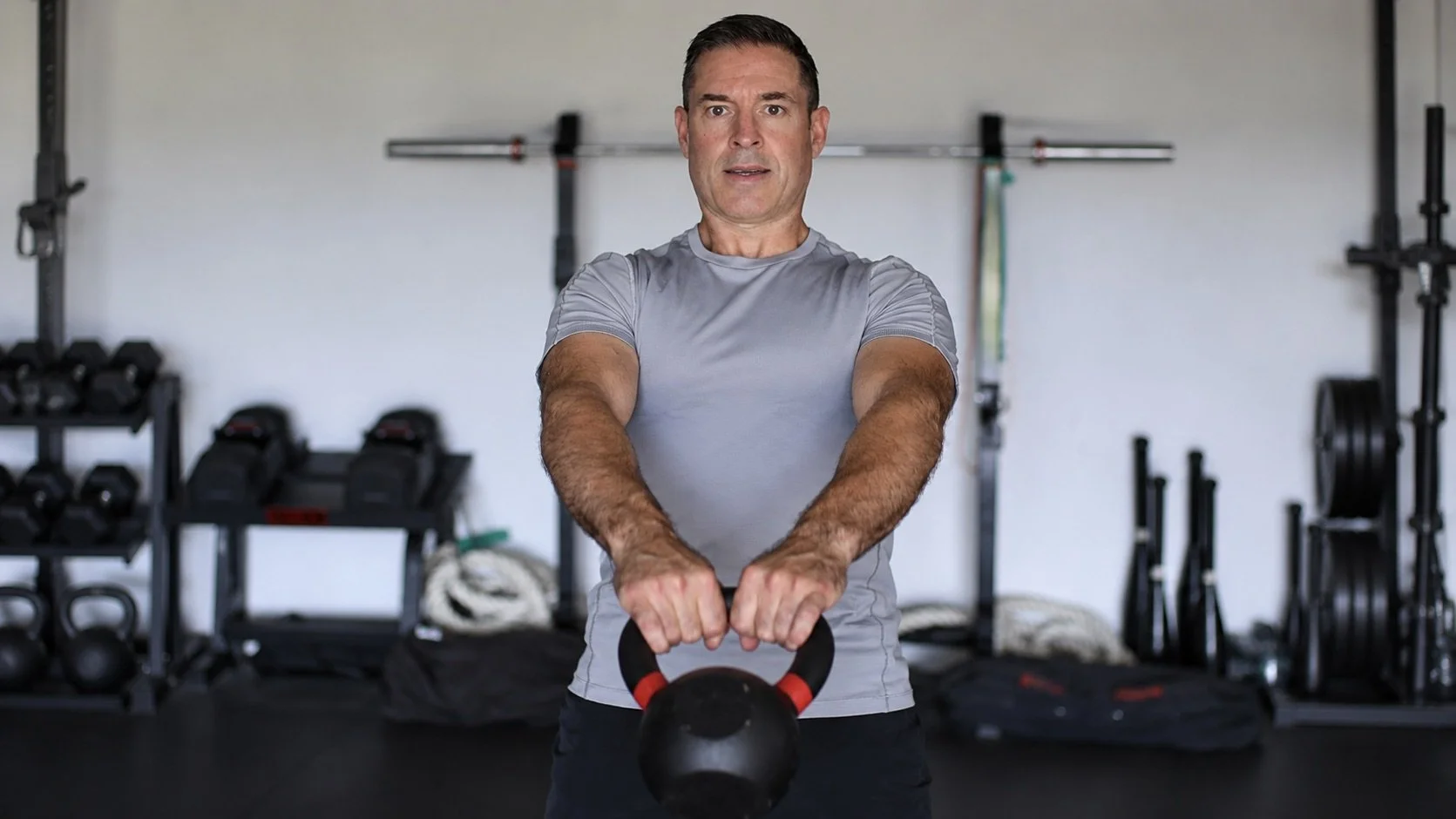
HIIT has its place, but high intensity is only one part of firefighter physical preparation. Varied-intensity interval training offers a practical way to develop multiple physical capacities around the realities of firefighting and shift work.
Firefighting requires strength, power, endurance, conditioning, and movement quality to meet the physical demands of the job. So how do you train for all of it around emergency response, shift work, and interrupted sleep?
Training time is limited, and readiness can change from one shift to the next. Effective training depends on consistency, structure, and progression, while the realities of the job require adaptability.
For more than 20 years, varied-intensity interval training (VIIT) has been the most effective and efficient approach I've used in my own training and with the candidates, recruits, and firefighters I've coached.
What Is Varied-Intensity Interval Training?
Interval training alternates planned periods of work and recovery. Change the intensity, work period, or recovery, and you change the training stimulus.
Varied-intensity interval training applies that concept across different levels of intensity based on the purpose of the session. Moderate and high-intensity intervals can emphasize strength, endurance, power, and conditioning, while light and low-intensity training can support aerobic capacity, movement quality, mobility, flexibility, and recovery.
Varied doesn't mean random. Each session is part of a structured and progressive training plan.
The Competition That Changed My Approach to Firefighter Fitness
My introduction to this style of training happened unexpectedly in 2005. Scott Sonnon walked into Station One and told me the police department had challenged us to a tactical fitness competition. We later learned he had told the police that we had challenged them.
It worked. Both departments held qualifiers, the fire department won, and our prize was a year of weekly tactical fitness training with Coach Sonnon.
The competition got my attention. The training changed how I thought about firefighter fitness.
At the time, I was a Peer Fitness Trainer conducting department fitness assessments twice a year. Most of the firefighters participating already had strong training backgrounds, yet I saw improvements in aerobic capacity, body composition, strength, muscular endurance, and movement quality across the board.
We continued to evaluate and apply these principles in the department, including a 108-day fitness and nutrition challenge in 2011. Among participants who were consistent with the program, we observed improvements across multiple fitness and body-composition measures. Examples included an average 1.73 ml/kg/min increase in VO₂ max, a 1% reduction in body fat, and four additional pull-ups.
Over the years, I continued to apply and refine the methodology with candidates, recruits, incumbent firefighters, and in my own training.
Interval Training Is More Than HIIT
When firefighters hear interval training, they often think of high-intensity interval training.
Hard circuits. Short rest periods. Deck-of-cards workouts. Keep moving until the clock stops.
HIIT has a place in firefighter fitness. Firefighters benefit from the ability to perform demanding work, tolerate fatigue, recover, and perform again.
High intensity, however, is only one way to use interval training.
Changing the interval structure, resistance, volume, movement speed, recovery, and effort can shift the training emphasis. Longer intervals with moderate resistance can emphasize muscular and aerobic endurance. Increasing resistance and recovery while reducing repetitions can shift the emphasis toward strength. Shorter, higher-output efforts can emphasize power and anaerobic capacity. Light and low-intensity sessions can support aerobic training, movement quality, mobility, and recovery.
Managing intensity takes practice. Feedback from your performance, effort, and movement quality can help you recognize when you're drifting away from the purpose of the session and adjust load, volume, tempo, or recovery as needed.
Like a race car driver entering a turn, you back off enough to stay in control, then accelerate when you're ready. Learning when to adjust and when to push is a skill that carries from the gym to the job.
Firefighter Tactical Fitness: Training for the Demands of the Job
Traditional strength and conditioning provides proven methods for developing individual physical capacities. Functional training can integrate those capacities through fundamental movement patterns and multiple planes of motion.
Firefighter Tactical Fitness is job-specific physical preparation designed around the demands of occupational training and emergency response. It develops the strength, endurance, power, conditioning, and movement quality required to improve performance, support recovery, and help reduce injury risk.
VIIT provides one effective way to organize that training.
Interval training is often associated with conditioning on treadmills, bikes, rowers, and other cardio equipment. In Firefighter Tactical Fitness, interval protocols can also be used to load fundamental movement patterns like the squat, hinge, lunge, push, pull, rotation, and locomotion. Kettlebells, sandbags, medicine balls, steel clubs, suspension trainers, and other simple tools make it possible to combine strength and conditioning efficiently within the same workout.
Many sessions can be completed in 45 minutes or less, including approximately 20 minutes of interval work during moderate and high-intensity training. That 20-minute work period relates to the sustained physical work firefighters may perform while operating on one air bottle without trying to simulate a fireground operation.
Job-specificity doesn't come from making every exercise look like a fireground task. It comes from developing the strength, endurance, power, conditioning, and movement quality those tasks demand.
Individual workouts are organized within a progressive plan that can shift the emphasis from muscular and aerobic endurance toward greater strength and power over time. Each workout has a purpose and contributes to the larger progression.
Light and Low-Intensity: Movement Quality and Active Recovery
Firefighter physical training involves more than strength and conditioning. Light and low-intensity training can develop movement quality and aerobic capacity while supporting recovery between harder sessions.
A 30/30 interval can be used for dynamic mobility by alternating slow, deliberate movement with faster, more dynamic movement, or for flexibility through contract-and-relax sequencing. Low-intensity aerobic training provides another way to build capacity with less physical stress.
Recovery isn't separate from the training program. It's part of the training program.
Structured, Progressive, and Adaptable
I often ask firefighters, “Are you training or just working out?” because there's a difference between following a training plan and doing a collection of random workouts.
Individual sessions work together as part of a larger training plan. Firefighters, however, don't operate in controlled conditions. Calls, interrupted sleep, occupational stress, and accumulated fatigue can change readiness from one day to the next.
Physical training is only one part of the total stress placed on the body. A hard workout after a quiet shift isn't the same as that workout after a working fire and interrupted sleep. The workout on the calendar hasn't changed, but the firefighter has.
That's where adaptability matters. A good training plan accounts for the firefighter's schedule and predictable demands while leaving room to adjust when conditions change. Performance and readiness can guide adjustments to intensity, volume, resistance, and recovery.
For example, a training cycle built around a 24/48–24/96 shift schedule might look like this:
Day 1 — On Shift: Active Recovery + Mobility + Occupational Training
Day 2 — Off Shift: Aerobic Training + Flexibility
Day 3 — Off Shift: Strength Training A
Day 4 — On Shift: Active Recovery + Mobility + Occupational Training
Day 5 — Off Shift: Aerobic Training + Flexibility
Day 6 — Off Shift: Strength Training B
Day 7 — Off Shift: Active Recovery + Mobility
Day 8 — Off Shift: Metabolic Conditioning
The harder sessions are intentionally placed off shift, while light and low-intensity sessions support movement quality, aerobic capacity, and recovery around occupational demands. If emergency response, interrupted sleep, overtime, or other demands change readiness, the individual session can be adjusted without abandoning the larger plan.
The individual workout changes, but the larger training plan keeps moving forward.
Train With Purpose: VIIT From Candidate to Career Firefighter
So how do you develop the physical capacities the job demands around the realities of firefighting and shift work?
Varied-intensity interval training provides a way to develop those capacities within a structured, progressive plan that can adapt to those demands.
How that training is organized depends on your career stage and work schedule. A candidate might use a seven-day cycle designed around physical ability testing and academy preparation.
A recruit can use a similar cycle adjusted for the physical demands of academy training, while a firefighter working an administrative schedule may also train within a traditional seven-day week.
An operations firefighter may benefit from a longer training cycle organized around shift work, occupational training, emergency response, sleep, and recovery. Regardless of the schedule, each session has a purpose and contributes to a larger progression in the program.
The schedule may change, and the training can adapt, but the purpose remains the same. Develop the physical capacity to meet the demands of the job and remain response-ready throughout your career.
Train With Purpose. Perform With Confidence. Be Response Ready.