
Firefighter Tactical Fitness: Applying Exercise Science to Improve Fireground Performance
By Ryan Provencher, Founder of Firefighter Peak Performance and Executive Fitness Advisor for CRACKYL Magazine
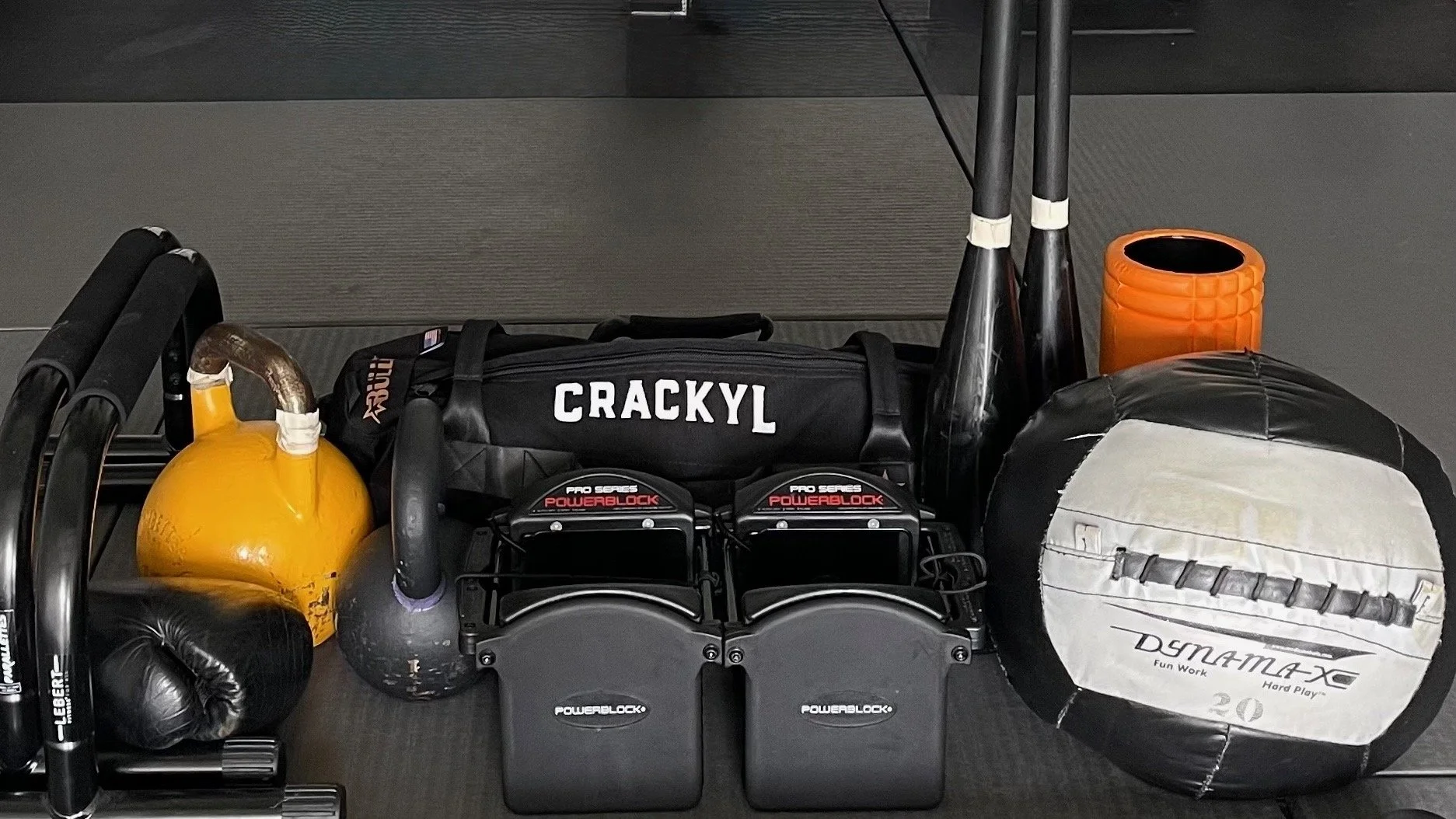
Discover how the Firefighter Tactical Fitness Framework applies exercise science to improve fireground performance, reduce injury risk, and build long-term operational readiness.
Where Exercise Science Meets the Fireground
In 1993, two decisions shaped the course of my life. I changed my major from athletic training to exercise science, and I joined the fire service as a volunteer firefighter.
I was drawn to the study of human performance through a lifelong commitment to fitness and health. At the same time, I was stepping into the fire service, learning what it meant to train, work, and serve as part of a team.
At first, those paths felt separate, one rooted in exercise science and sports performance, the other in emergency response and public service. It didn't take long to realize they were deeply connected.
In the classroom, I learned how exercise science was used to prepare athletes for the demands of competition. Performance was developed through structured training, progressive overload, periodization, recovery, and continuous evaluation.
On the fireground, performance was tested under pressure, fatigue, uncertainty, and rapidly changing conditions. The environment was different, but the principles were the same. The science hadn't changed, only the application had.
But there was a gap.
Athletes routinely trained using structured, progressive systems grounded in exercise science. Many firefighters, despite facing extraordinary physical demands, were still relying on random workouts, fitness trends, or whatever training happened to be available. The fire service expected exceptional physical performance without consistently providing a systematic approach to developing it.
We may not have competitive seasons like traditional athletes, but we do know the physical demands of the job. That allows us to apply the same exercise science principles through structured, progressive training designed around the realities of firefighting.
This is where firefighter fitness becomes more clearly defined. Conventional Fitness builds your foundation. Functional Fitness enhances performance by improving movement quality and work capacity. Firefighter Tactical Fitness maximizes fireground readiness by preparing firefighters for the specific physical demands of emergency operations.
Through my own training, coaching, and more than 30 years in the fire service, one truth became increasingly clear.
Firefighters are athletes.
Not because they compete in sport, but because the profession demands exceptional physical performance. Success depends on developing the strength, endurance, power, resilience, and movement efficiency to perform under pressure in unpredictable environments.
That realization became the foundation of the Firefighter Tactical Fitness Framework—a system built on exercise science and real-world experience that provides a structured approach to preparing firefighters for the physical demands of emergency operations. Firefighter Tactical Fitness is the deliberate application of exercise science to improve fireground performance, reduce injury risk, and support long-term readiness.
That process begins with an honest assessment of current fitness and readiness.
Size-Up: Establish a Clear Baseline
Every successful emergency response begins with a size-up. Before developing a strategy or taking action, firefighters assess conditions, identify hazards, evaluate available resources, and determine the best course of action.
Physical preparation deserves the same disciplined approach.
In exercise science, this process begins with a baseline assessment. A comprehensive assessment provides objective and subjective insight into current fitness, movement quality, limitations, and potential risk factors, establishing the foundation for effective program design.
Depending on the objective, that assessment may include general fitness testing to measure physical attributes such as strength, endurance, power, and aerobic fitness; firefighter-specific performance evaluations to assess the ability to complete occupational tasks in a realistic environment; or tactical fitness assessments that use job-specific movement patterns and training demands to evaluate how well physical preparation translates to emergency operations.
Within the Firefighter Tactical Fitness Framework, the Firefighter Tactical Fitness Assessment (FTFA) provides a practical way to establish a baseline and monitor progress. It combines firefighter-specific movement patterns in a timed training protocol designed to reflect the work capacity required during a single SCBA air bottle, using both objective and subjective performance measures.
The goal is not simply to measure fitness. It is to understand how well your physical capabilities support the demands of the job.
A thorough size-up identifies strengths to build upon, limitations to address, and priorities for improvement, ensuring that training decisions are guided by meaningful information rather than assumptions.
That information becomes the foundation for selecting the right fitness strategy and preparing for the demands of the fireground.
Strategy: Select Your Fitness Plan
Once the baseline is established, the next step is selecting a training strategy that aligns with your goals, current fitness level, and the physical demands of the job.
On the fireground, strategy provides direction before action. It establishes priorities, guides tactical decisions, and ensures every action contributes to the overall objective.
Physical preparation follows the same principle.
Exercise science has long applied this progression to athletic preparation through General Physical Preparedness (GPP), Specific Physical Preparedness (SPP), and Sport-Specific Physical Preparedness (SSPP). Firefighters are not preparing for sport or competition, however. They are preparing for the physical demands of a profession. Within the Firefighter Tactical Fitness Framework, the final phase is adapted to Job-Specific Physical Preparedness (JSPP) to better reflect that objective.
These phases correspond to three progressive training strategies:
Conventional Fitness (GPP) builds the foundation by developing muscular strength, muscular endurance, aerobic fitness, and healthy body composition.
Functional Fitness (SPP) builds upon that foundation by improving movement quality, stability, coordination, mobility, and power through integrated movement patterns and energy system development.
Firefighter Tactical Fitness (JSPP) applies those physical qualities to the specific demands of emergency operations through job-specific training that develops operational work capacity, resilience, and fireground readiness.
Rather than competing approaches, these strategies work together as a progressive system. Each phase builds upon the last, allowing firefighters to move from Foundation to Performance to Readiness. This progression can be repeated throughout a firefighter's career to continue developing performance while managing fatigue and reducing the risk of burnout.
Shift work, emergency responses, sleep disruption, and accumulated fatigue all influence how firefighters respond to training. A successful strategy balances structure with flexibility, allowing each phase to serve a clear purpose while adapting to the realities of the profession.
The result is consistent, sustainable progress that prepares firefighters for both the immediate demands of the job and the long-term demands of their career.
Tactics: Execute Purpose-Driven Workouts
Once a strategy has been established, it must be put into action.
On the fireground, tactics are the coordinated actions used to accomplish a strategic objective. Whether advancing a hoseline, conducting a search, or performing ventilation, every tactic serves a specific purpose within the overall incident plan.
The same principle applies to firefighter fitness.
Your daily workouts are the tactics that put your fitness strategy into action. Every training session should have a clear purpose, contributing to the overall plan while developing a specific physical adaptation.
Exercise science describes this through the Specific Adaptation to Imposed Demands (SAID) Principle. The body adapts specifically to the demands placed upon it, which means every workout should be intentionally designed to produce a desired training outcome.
Firefighters must develop multiple physical qualities, including aerobic capacity, strength, power, work capacity, movement efficiency, and the ability to recover between repeated high-intensity efforts. Each quality responds differently to training. No single workout develops them all effectively. Instead, different workout tactics should be strategically integrated within a structured and adaptable training plan.
Moderate-Intensity Strength Training develops muscular strength, endurance, and power while reinforcing movement quality and building the resilience needed to safely perform physically demanding tasks
High-Intensity Metabolic Conditioning develops work capacity and the ability to repeatedly express strength, endurance, and power under fatigue, reflecting the demands of emergency operations.
Low-Intensity Aerobic Training builds cardiovascular endurance, supports recovery, and promotes the long-term health needed for a sustainable fire service career.
Active Recovery and Mobility Training restores movement quality, reduces accumulated fatigue, and prepares the body for future training while helping reduce injury risk.
Together, these purpose-driven workout tactics create a balanced training system that improves fireground performance, supports recovery, and promotes long-term health and career longevity.
Purpose-driven workouts replace random exercise with intentional preparation. The effectiveness of each workout then depends on selecting the right training exercises to produce the desired adaptation.
Tasks: Select Job-Specific Training Exercises
Once a workout has been designed, the next step is selecting the exercises that support its intended purpose and desired adaptation.
On the fireground, every task supports a tactical objective. Advancing a hoseline, forcing entry, raising a ladder, conducting a search, or performing a victim rescue all contribute to accomplishing the overall strategy.
The same principle applies to firefighter fitness.
The way you move in the gym reflects the way you perform on the job.
Training exercises are the tasks that produce the desired physical adaptation. Every exercise should have a clear purpose, supporting the objective of the workout while preparing firefighters for the physical demands of emergency operations.
Exercise science demonstrates that strength and coordination are expressed through movement, not isolated muscles. Biomechanics and kinesiology explain how force is generated, transferred, and absorbed throughout the body, making movement patterns, rather than individual muscle groups, the foundation of effective firefighter training.
Seven essential movement patterns provide a practical foundation for connecting exercises in the gym to physical tasks on the fireground:
Squatting develops lower-body strength for lifting and moving patients, equipment, and other loads. Goblet squats and sandbag front squats are practical training examples.
Hinging develops the posterior-chain strength and mechanics needed to lift equipment and perform victim drags. Trap bar deadlifts and kettlebell swings reinforce this pattern.
Lunging develops unilateral strength, stability, and control for climbing stairs and advancing hoselines. Split squats and walking lunges provide direct training applications.
Pushing, both horizontally and vertically, develops the strength required for tasks such as forcible entry and raising ladders. Push-ups and overhead presses train these movement patterns.
Pulling, both horizontally and vertically, develops the strength needed for pulling hose and hoisting equipment. Suspension rows and pull-ups provide practical examples.
Rotation develops the coordinated transfer of force through the hips and trunk required for forcible entry, vehicle extrication, and other rotational tasks. Medicine ball lateral throws and sandbag halos train this pattern dynamically.
Locomotion develops the ability to move the body and external loads through space, supporting equipment carries, search and rescue, and movement across the fireground. Farmer's carries and floor crawls are simple examples.
These patterns can be trained in many ways, but simple tools such as kettlebells, sandbags, medicine balls, steel clubs, and suspension trainers are particularly effective because they allow movement to be loaded dynamically across multiple planes while challenging coordination, stability, grip strength, and full-body integration.
The goal is not simply to become stronger in the gym. It is to develop movement quality, strength, endurance, power, and resilience that transfer to the fireground, where physical demands are dynamic, unpredictable, and rarely isolated.
After-Action Review: Evaluate Performance
Every emergency response concludes with an After-Action Review. The incident may be over, but the learning has just begun. By evaluating what happened, firefighters identify successes, recognize opportunities for improvement, and apply those lessons to future responses.
Physical training deserves the same discipline.
Scoring the workout is part of the workout.
Just as an After-Action Review strengthens future fireground performance, evaluating each training session provides the feedback needed to guide continuous improvement. Simply put, you can't improve what you don't measure.
Effective After-Action Reviews combine measurable facts with thoughtful reflection. Physical training works the same way. Exercise science relies on both objective and subjective performance measures to evaluate training outcomes and guide future programming. Each provides a different type of feedback, and together they create a more complete picture of performance and readiness.
Objective Performance Metrics such as time, load, repetitions, distance, rounds completed, and heart rate provide measurable evidence of progress. They allow firefighters to establish a baseline, monitor adaptation over time, and determine whether training is producing the intended results.
Subjective Performance Metrics such as movement quality, perceived exertion, discomfort, focus, and dexterity develop mindfulness and awareness of how the body and mind are responding to training. Learning to recognize fatigue, changes in movement quality, and early signs of excessive stress improves decision-making in the gym. That same awareness carries to the fireground, helping firefighters manage effort, maintain movement quality, and recognize when performance begins to break down under stress and fatigue.
Together, these measures create a continuous feedback loop. Objective metrics tell you what happened. Subjective metrics help you understand how you responded. Together, they provide the information needed to make better training decisions.
The next step is acting on that feedback. In exercise science, adjusting training based on readiness and response is known as autoregulation.
Performance Feedback: Adapt Training to Readiness
No emergency incident unfolds exactly as planned. Fire officers continuously evaluate changing conditions and adjust tactics while remaining committed to the overall strategy.
Effective physical training requires the same adaptability.
In exercise science, this adaptability is known as autoregulation, adjusting training based on readiness and how your body responds to training. For firefighters, that means making smart adjustments within individual workouts and across the training cycle based on factors such as call volume, sleep, fatigue, recovery, and accumulated stress.
Performance feedback transforms evaluation into action. The objective performance metrics and subjective awareness developed through each workout provide the information needed to make informed training decisions.
Within an individual workout, autoregulation means operating near the edge of your current work capacity without sacrificing movement quality or control. Like a race car driver approaching a corner, you push hard on the straightaway, then back off just enough to make the turn without crashing. The goal isn't to train at maximum intensity every day. The goal is to train at the highest quality your body is prepared to handle that day.
Across the training cycle, autoregulation helps keep the overall plan aligned with daily readiness. A well-designed firefighter fitness program should already account for the realities of shift work, call volume, disrupted sleep, and accumulated fatigue through a strategic balance of strength training, metabolic conditioning, aerobic training, and active recovery. When readiness changes, these workout tactics can be adjusted or exchanged while maintaining the overall strategy and continuing to make forward progress.
A high-intensity workout planned after a demanding shift, for example, may be exchanged for aerobic training or active recovery, then returned to when readiness improves.
Autoregulation is not abandoning the plan. It is intelligently applying the plan.
By balancing structure with adaptability, firefighters can continue progressing through each phase of training while reducing unnecessary fatigue, lowering injury risk, and sustaining long-term fireground readiness.
From Random Effort to Intentional Preparation
Firefighter Tactical Fitness is more than a workout philosophy. It is a systematic approach to preparing firefighters for the physical demands of emergency operations.
Firefighters have never lacked effort. What has often been missing is a structured process for turning that effort into measurable, sustainable performance.
Without a clear baseline, training lacks direction. Without a strategy, workouts become disconnected. Without purpose, exercises lose relevance. Without evaluation and performance feedback, progress becomes difficult to measure, sustain, and continually improve.
The Firefighter Tactical Fitness Framework applies exercise science to solve that problem. It transforms physical training from a collection of random workouts into a deliberate process of assessment, planning, execution, evaluation, and adaptation.
Firefighter Tactical Fitness is not defined by the population it serves, but by how the training is designed to meet the demands of the job. It applies exercise science to develop the strength, endurance, power, work capacity, movement quality, and resilience required for the unpredictable demands of emergency operations while supporting long-term health and career longevity.
Because the way we prepare determines the way we perform.
Train With Purpose. Perform With Confidence. Be Response Ready.